
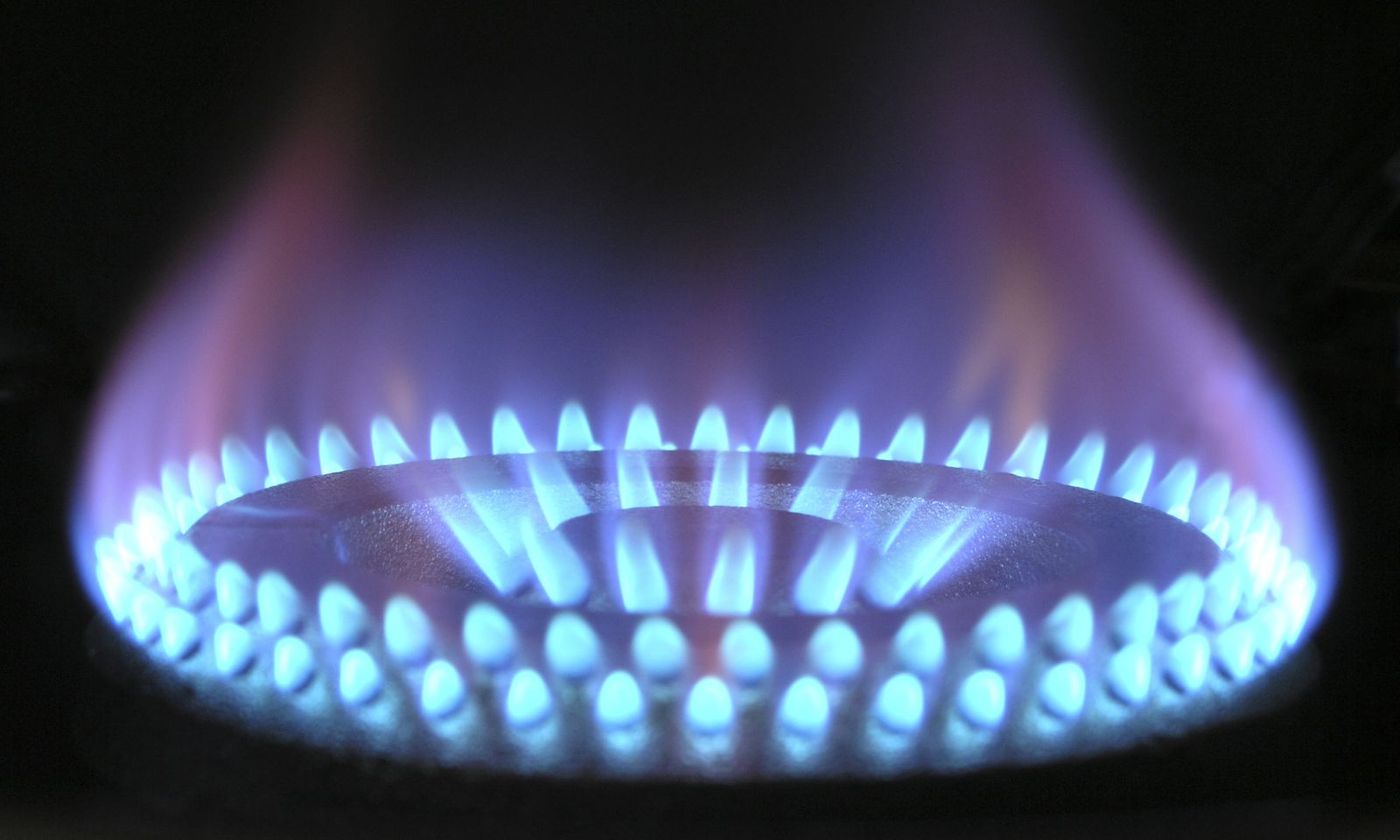
How a gas tank fails
A gas water heater is a simple machine with a short list of failure points. Cold water drops down the dip tube to the bottom of the tank, a burner fires underneath, and combustion gases leave through a flue running up the centre. When hot water stops arriving, the fault is almost always in the ignition path, the gas control, or the venting.
Wilmington runs on natural gas through most of the city, with propane more common on properties further out in New Castle County. The diagnostic process is similar for both, but propane units use different orifices and regulator pressures, so parts are not interchangeable.
Symptoms that point to a gas fault
- The pilot lights but goes out as soon as you release the control knob
- The burner never fires even though the pilot is lit
- A sooty or yellow flame instead of a steady blue one
- A smell of exhaust near the heater, or condensation running down the flue
- The status light on the gas valve flashing an error code
- Water that heats far more slowly than it used to
What gets checked
Ignition path
Thermocouple millivolt output, pilot orifice cleanliness, igniter continuity on electronic-ignition models, and the thermal switch on the underside of the combustion chamber. A tripped thermal switch means something restricted airflow, so the cause has to be found rather than just reset.
Gas control valve
The valve houses the thermostat, the safety interlock and the diagnostic light. Valves fail internally and are not field-rebuildable. Reading the fault code before replacing anything avoids swapping a good valve for a bad thermocouple.
Burner and manifold
Burner ports clog with lint, dust and rust scale, especially in basement installations. A restricted burner produces a lazy flame, slow recovery and soot deposits.
Venting and draft
Atmospheric vents rely on natural draft. A disconnected flue section, a blocked chimney liner, or negative pressure from a strong kitchen or bath fan can spill combustion gas back into the room. This is a safety fault, not a comfort fault.
Stop and call if you smell gas
If there is a gas odour near the heater, do not relight the pilot and do not operate electrical switches. Leave the building, then call your gas utility's emergency line from outside. Once the line is confirmed safe, we can take over the repair.
Repairs against replacement
A thermocouple, igniter, burner assembly or gas control valve is a straightforward repair on a tank that is otherwise sound. What changes the calculation is the tank itself. Once the steel is perforated and the unit is leaking from the body, no burner-side repair helps, and the conversation moves to replacing the water heater.
Age matters too. On a gas tank well past a decade of service with a depleted anode rod and heavy sediment, replacing a failed gas valve often buys less time than it appears to.
Gas work in Wilmington housing stock
Much of Wilmington's older housing — the rowhomes through Hedgeville, Browntown and the Ninth Ward — puts gas heaters in tight basements sharing a chimney with the furnace. Shared venting has to be sized correctly for both appliances, and a furnace replacement that left an oversized flue can stop a water heater drafting properly. That is a common and easily missed cause of repeated pilot outages.
Work on gas appliances in Wilmington is permitted and inspected through the City of Wilmington's licences and inspections process, and through New Castle County for properties outside city limits.
Related repairs
- Pilot light repairThermocouples, thermopiles, pilot orifices and igniter assemblies.
- Water heater burner repairClogged ports, poor combustion, soot and manifold faults on gas tanks.
- No hot water repairComplete loss of hot water on gas, electric and tankless systems.
- Water heater replacementTank and tankless replacement, correct sizing, venting and code compliance.
Questions we get asked
Why does my pilot light keep going out?
The usual cause is a failing thermocouple that no longer generates enough millivoltage to hold the gas valve open. Draft problems, a dirty pilot orifice and a failing gas control valve produce the same symptom, so the thermocouple output is measured before anything is replaced.
Can I relight the pilot myself?
On an older standing-pilot heater the lighting instructions are printed on the unit and many homeowners do it safely. If it will not stay lit after two attempts, stop — repeated relighting does not fix the underlying fault and fills the chamber with unburned gas between attempts.
What does a flashing light on the gas valve mean?
Electronic gas control valves blink a fault code, and the legend is usually on a label on the heater. The codes distinguish between a failed thermopile, a tripped thermal switch and an internal valve fault, which is why reading it first saves replacing the wrong part.
Is a yellow burner flame a problem?
Yes. A correctly burning gas flame is mostly blue. Yellow, lazy or lifting flames indicate incomplete combustion from a dirty burner, a blocked air inlet or a venting restriction, and incomplete combustion produces carbon monoxide.
Get it looked at
Describe what the heater is doing when you call — the symptom usually narrows the fault before anyone arrives.
(302) 603-9708 Call now for service